Typewriters vs. Computers: Why Are Some Developers Still Resisting AI?
When technology changes how we work, is holding on to the old way preserving our expertise—or limiting what we could become?
I recently had a conversation with someone I respect tremendously.
They're an experienced software developer. Someone whose technical knowledge, abilities, and accomplishments I've admired for years.
During our conversation, I discovered something that genuinely surprised me.
They still aren't using AI to help develop software.
Not to write code.
Not to review or audit code.
Not to investigate problems or explore alternative approaches.
They're continuing to write everything manually, much as they've always done.
Naturally, I asked why.
The answer?
"I don't have time."
I found that response fascinating.
Not because I question their abilities or the quality of their work. Quite the opposite. I have tremendous respect for what they know and what they've accomplished.
But the explanation seemed almost paradoxical.
Here's a technology that has the potential to dramatically reduce the time required to perform many development tasks, and the reason for not exploring it is a lack of time.
It got me thinking about something much bigger.
Are some developers so invested in how they've always created software that they're reluctant to explore a different way of doing it?
And that brought me back to something far removed from software development.
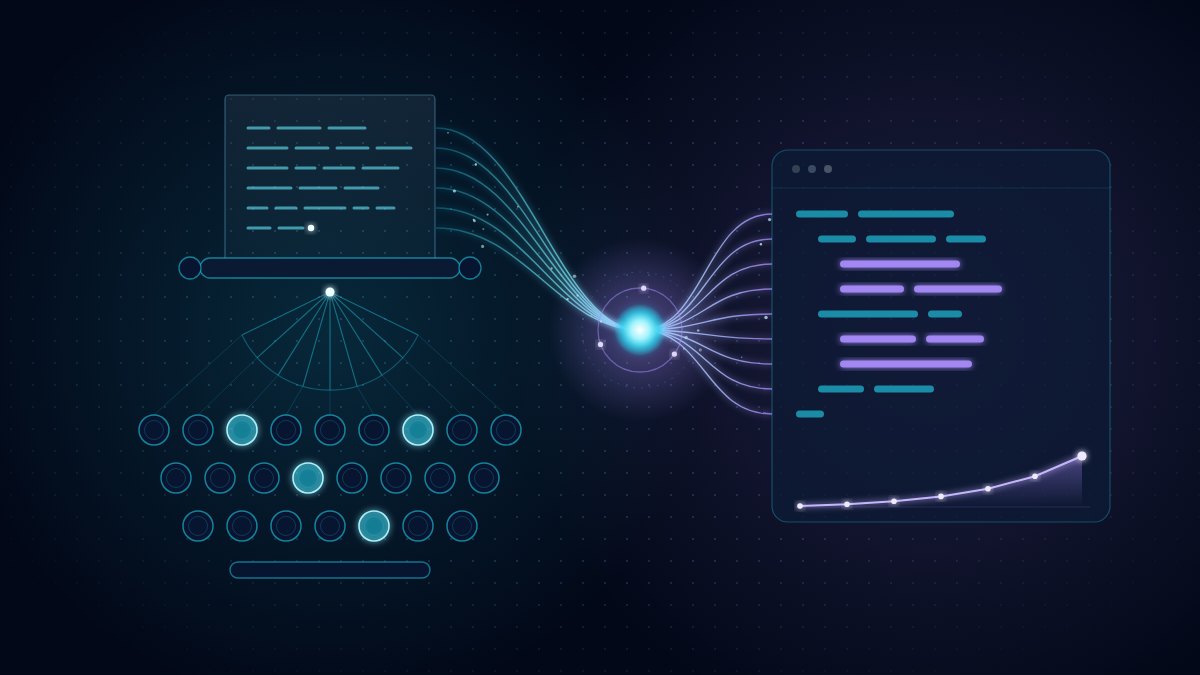
Typewriters.
Imagine Being an Author Who Refuses to Use a Computer
Think about how books were written before computers and modern word-processing software became commonplace.
Authors wrote manuscripts by hand or used typewriters.
Every sentence had to be composed and typed.
Every revision required effort.
Changing a paragraph could mean retyping an entire page.
Reorganizing chapters, correcting mistakes, or editing lengthy manuscripts was often a laborious process.
And yet, some of the greatest books ever written were produced using those methods.
The writers were brilliant.
The stories were extraordinary.
The quality of the work wasn't diminished because the technology was primitive by today's standards.
Then computers and word processors arrived.
Suddenly, authors could edit without retyping pages, reorganize chapters, search through manuscripts, check spelling, maintain multiple versions, and experiment with ideas more easily.
The technology didn't make someone a great author.
It gave great authors better tools.
And it made the process of writing considerably more flexible and efficient.
Now imagine an accomplished author today insisting on writing every manuscript on a traditional typewriter.
No word processor.
No digital editing.
No spell-checking.
No electronic research tools.
Not because they prefer the creative experience of writing that way, but because they believe computers shouldn't be trusted to help them write.
We might admire their dedication to the craft.
We might respect their personal preference.
But would we really consider that the most effective way to produce and revise a manuscript?
The typewriter didn't become a bad tool. It simply stopped being the best tool for most writers.
And the computer didn't replace the author.
It changed what the author could accomplish.
That's what I keep thinking about when I hear experienced developers dismiss AI without seriously exploring it.
Is Writing Code the Same Thing as Being a Developer?
For decades, software developers have been valued partly for their ability to translate ideas and business requirements into functioning code.
It's a specialized skill.
One that requires years of learning, experience, problem-solving, and technical understanding.
And I've worked with some incredibly talented people who possess those abilities.
But AI is forcing us to reconsider something fundamental.
Is a developer's greatest value the code they personally write, or the software they're capable of creating?
Those aren't necessarily the same thing.
If a developer spends four hours manually writing functionality that could be produced, reviewed, tested, and validated in a fraction of that time using AI, what exactly have we gained by requiring them to write it manually?
Does the application become better simply because someone personally typed every line?
Does the developer become more valuable because the process took longer?
Of course not.
The value comes from understanding the requirements, designing the solution, making sound technical decisions, ensuring its reliability, and delivering something that works.
The code is how we achieve the result.
It's not the result itself.
And I think that's a distinction that becomes increasingly important as AI continues to improve.
Just as an author's value isn't determined by how many words they physically type, a developer's value shouldn't be determined by how many lines of code they personally produce.
Are We Protecting the Skill or Protecting Our Identity?
Here's where the conversation becomes a little uncomfortable.
I sometimes wonder whether resistance to AI is about more than concerns over accuracy, security, or reliability.
Could part of it be about identity?
Imagine spending twenty years mastering a particular skill.
You've invested enormous amounts of time learning programming languages, understanding frameworks, developing techniques, and solving complex technical problems.
Your career, reputation, and professional confidence are built around those abilities.
And then a new technology arrives that can perform substantial portions of that work in seconds.
I can understand why that might be unsettling.
Not because your expertise has suddenly become worthless.
But because the relationship between your expertise and the work you perform is changing.
Things that once required considerable effort can now be accomplished much faster.
Tasks that previously demanded specialized technical knowledge are becoming accessible to people who don't possess the same background.
And the boundaries between business expertise and technical expertise are beginning to shift.
That's a significant change.
But here's what I find difficult to understand.
Why would someone with tremendous technical expertise choose not to explore a technology that could make that expertise even more valuable?
Imagine what a brilliant developer could accomplish if they combined decades of experience with the capabilities of AI.
Their ability to evaluate architecture, recognize weaknesses, understand complex systems, and determine whether a solution is actually correct doesn't disappear.
It becomes an advantage.
They're potentially in an extraordinary position to get more out of AI than someone who lacks that experience.
Which makes me wonder whether some of the resistance is really about preserving the way we've always worked rather than exploring what we could become capable of doing.
I don't think that explains every developer who's reluctant to adopt AI.
But I suspect it explains some of the hesitation.
And I think it's worth discussing.
We've Experienced the Liberation Firsthand at ForecastWorx
One of the reasons I find this topic so interesting is how dramatically our own experience has changed.
At ForecastWorx, AI has fundamentally transformed the way we build software.
We've embraced it throughout our development process.
And it has been liberating.
Not simply because we can produce code faster.
But because we're no longer constrained in the same way by the time, cost, and complexity associated with traditional software development.
We can take an idea, explore the requirements, build something, test it, identify what we don't like, change it, and continue improving it.
What previously might have involved lengthy development cycles can now be approached much more iteratively.
We can experiment.
We can change direction.
We can pursue ideas that would previously have been difficult to justify because of development costs.
And we can personalize functionality around what we actually need rather than accepting the limitations of what was originally designed.
We've stopped asking how difficult something would be to build and started asking how much better it could make our business.
That's an enormous shift.
It doesn't mean we no longer encounter technical challenges.
We absolutely do.
AI makes mistakes.
It can misunderstand requirements, make incorrect assumptions, introduce defects, or generate solutions that aren't appropriate for the problem.
We've learned that firsthand.
But we've also learned how to work with those limitations.
How to provide better context.
How to validate the results.
How to challenge what AI produces.
And how to continuously improve our development approach.
The more we work with AI, the better we understand how to use it.
And the more we understand it, the more ambitious we become.
That's the part of this journey I find most exciting.
The Real Advantage Isn't Just Speed. It's What You Learn.
I've written before about how the greatest return from our AI journey hasn't been eliminating software subscriptions or dramatically accelerating development.
It's been everything we've learned.
And the same principle applies here.
When you begin adopting a new technology, you don't simply gain access to its current capabilities.
You begin developing an understanding of how to use it.
You discover what works.
You discover what doesn't.
You learn where human judgment is essential.
You develop processes, techniques, and expectations that improve as the technology improves.
And that knowledge compounds.
Consider two equally talented developers.
One begins experimenting with AI today.
They use it to review existing code, investigate defects, evaluate alternative approaches, generate tests, and gradually take on more development work.
They're learning what to trust, what to question, and how to get better results.
The other continues working entirely manually because they don't believe AI is reliable enough.
Now imagine the technology continues improving over the next few years.
Both developers still possess their underlying technical expertise.
But one has also developed years of practical experience integrating AI into their work.
The other is just beginning.
Who is better positioned to take advantage of the next generation of development capabilities?
To me, the answer seems obvious.
The greatest cost of waiting may not be the productivity you're missing today. It's the experience you won't have tomorrow.
And that's something that concerns me far more than whether AI can generate perfect code right now.
But What About the Developers Who Say They Don't Trust It?
I hear this argument frequently.
AI can't be trusted.
It makes mistakes.
It produces insecure code.
It doesn't understand the entire application.
It can create technical debt.
And my response is fairly simple.
You're right to question it. But how can you know what it can and cannot do if you won't seriously try it?
There's a difference between skepticism based on experience and skepticism based on assumptions.
If someone has spent significant time working with AI, evaluated its limitations, and concluded that it isn't appropriate for a particular task, I respect that judgment.
They've made an informed decision.
But rejecting it without experimenting is something entirely different.
And here's another consideration.
We're not asking AI to replace all the judgment and responsibility involved in software engineering.
We're asking whether AI can help us perform the work more effectively.
Even if a developer doesn't trust AI to independently produce production-ready code, why wouldn't they explore using it to review their own code?
To identify potential defects?
To generate test scenarios?
To investigate performance issues?
To explain unfamiliar code?
To explore alternative designs?
To improve documentation?
There are countless opportunities to benefit from AI without surrendering control of the development process.
And if the technology doesn't improve the outcome in a particular situation, don't use it for that situation.
But at least make that decision based on experience.
You don't have to trust AI blindly to benefit from it intelligently.
Nobody Is Suggesting We Abandon Good Engineering
I want to be clear about something.
AI-assisted development is not an excuse to abandon sound engineering practices.
A working demonstration isn't the same as a reliable software product.
Code that compiles isn't necessarily secure.
And an application that appears to function correctly isn't necessarily suitable for customers to depend on.
Testing matters.
Security matters.
Architecture matters.
Data integrity matters.
Maintainability matters.
And someone must remain accountable for the software being delivered.
In fact, I believe those disciplines become even more important when AI makes it possible to create software at unprecedented speed.
Because when development accelerates, the potential to introduce problems can accelerate as well.
This is where experienced developers have an extraordinary opportunity.
Their expertise can help ensure that the speed of AI doesn't come at the expense of quality.
But that expertise doesn't require them to personally write every line of code.
Just as a great author still needs to understand storytelling, structure, language, and their audience when using a word processor, a great developer still needs to understand what makes software dependable.
AI changes how we create. It doesn't eliminate our responsibility for what we create.
And I believe the developers who understand that distinction will be exceptionally valuable.
Is "I Don't Have Time" Really a Good Reason?
I keep coming back to the explanation that started this entire thought process.
"I don't have time."
I know developers are busy.
There's always another release, another defect, another requirement, another customer request, or another technical problem that needs attention.
And learning a new tool does require an investment.
But isn't that precisely why we should be exploring technologies that can make our work more efficient?
Imagine an author saying they don't have time to learn word processing because they're too busy retyping manuscripts on a typewriter.
Or an accountant refusing to learn spreadsheets because they're too busy performing calculations manually.
There may be a temporary learning curve.
There may be frustrations.
The benefits may not be immediate.
But surely the long-term opportunity deserves some attention.
And I'm not suggesting developers abandon their existing responsibilities and spend weeks experimenting with every new AI model.
Start small.
Take an existing function and ask AI to review it.
Give it a defect and see whether it can identify the cause.
Ask it to generate tests for code you've already written.
Have it explain a section of an unfamiliar application.
Compare its proposed solution with your own.
You don't have to change everything overnight.
But spending even a little time discovering what the technology can do seems like a worthwhile investment.
If you're too busy to investigate something that could fundamentally change how efficiently you work, perhaps being too busy is exactly the problem worth solving.
Maybe We're Asking the Wrong Question
I think the debate about AI and software development has become too focused on whether AI can replace developers.
That's not the question that interests me.
I want to know what developers can become capable of doing when they're no longer limited by the effort required to manually produce every part of an application.
What happens when a developer can spend more time exploring architecture and less time writing repetitive code?
What happens when testing can be expanded dramatically with AI assistance?
What happens when a business expert and a technical expert can collaborate directly with AI to turn ideas into working applications?
What happens when the cost of experimenting falls enough that we can explore ten different approaches instead of committing to the first one we can afford to build?
And what happens when people who previously couldn't participate directly in software development gain the ability to contribute?
Those are the questions that excite me.
Because I don't see AI simply making existing developers faster.
I see it expanding who can participate in building software and what experienced developers can accomplish.
The opportunity isn't to replace expertise. It's to multiply what expertise can achieve.
And I find that a far more interesting future than continuing to debate whether software written manually is somehow more legitimate than software created with AI assistance.
In 20 Years, Will We Look Back and Laugh?
I wonder what this conversation will sound like twenty years from now.
Will developers still manually write every line of code?
Perhaps some will.
Just as some authors still prefer writing by hand or using typewriters.
And there's nothing wrong with that.
Sometimes people value the process itself.
But will writing all software manually be the dominant way we create business applications?
I find that increasingly difficult to imagine.
AI capabilities are evolving quickly.
The tools are becoming more sophisticated.
The development processes surrounding them are maturing.
And the possibilities continue to expand.
I don't know exactly where the technology will be in five years, let alone twenty.
But I have a hard time believing we're going to return to a world where AI plays little or no role in software development.
Which raises an important question.
If the direction of technology is becoming increasingly clear, why wouldn't we want to be part of shaping that future instead of waiting until we're forced to adapt to it?
That's how I think about our journey at ForecastWorx.
We're not waiting for AI to become perfect.
We're learning how to use it responsibly now.
We're discovering its limitations, improving our development practices, and pushing the boundaries of what we're capable of building.
And as AI continues to improve, we'll be able to build on everything we've learned.
That's an opportunity I wouldn't want to miss.
The Best Developers Won't Be Defined by How Much Code They Write
I have enormous respect for people who have dedicated their careers to software development.
I know how much experience, knowledge, discipline, and creativity it takes to build great software.
And I don't believe AI diminishes those accomplishments.
But I do believe it challenges how we define the value of that expertise.
The best developers of the future may not be the ones who can write the most code.
They may be the ones who understand problems most deeply, design the best solutions, make the smartest technical decisions, and know how to use AI and other tools to deliver reliable software efficiently.
Their value won't come simply from producing code.
It will come from knowing what should be built, why it should be built, how it should work, and whether the result can be trusted.
And when I think about the developers I respect most, those are exactly the qualities that made them exceptional in the first place.
Which brings me back to the person who inspired this article.
I don't respect them any less because they haven't embraced AI.
I still admire their abilities and experience.
But I can't help thinking about what they might accomplish if they combined everything they already know with everything AI is making possible.
Not because they need AI to prove their value.
But because their expertise is precisely what could make AI so much more valuable.
The Author Was Never the Typewriter
Looking back at the evolution of writing, I think there's a lesson worth remembering.
The author wasn't the typewriter.
The typewriter was simply the tool.
When computers arrived, they didn't eliminate the creativity, judgment, imagination, or storytelling ability that made authors great.
They gave authors new ways to use those abilities.
And while AI is a much more significant change than the transition from typewriters to word processors, I believe the underlying principle still applies.
The developer isn't the code editor.
The developer isn't the programming language.
And the developer's value isn't defined by the number of keystrokes required to produce an application.
The value is in the knowledge, creativity, judgment, and problem-solving ability they bring to creating something useful.
AI doesn't have to threaten that.
It can amplify it.
And for those of us who have embraced Vibeware, that amplification has been extraordinary.
We've experienced the freedom to build more, experiment more, learn more, and challenge limitations that once seemed unavoidable.
I don't believe every developer needs to abandon traditional coding tomorrow.
But I do believe every developer owes it to themselves to understand what AI can do before deciding it has nothing to offer.
Because the technology isn't standing still.
And the longer we wait, the more there is to learn.
A great author doesn't become less of an author because they stopped using a typewriter.
And a great developer doesn't become less of a developer because they stopped writing every line of code.
Perhaps the real question isn't whether AI will change software development.
It's whether we're willing to change with it.
That's the shift.
I believe experienced developers who dismiss AI without trying it are confusing the tool with the craft. Authors didn't become lesser writers when they traded typewriters for computers, and great developers won't become lesser engineers when AI writes more of the code. At ForecastWorx, embracing AI has multiplied what our expertise can achieve, and the experience we gain compounds as the technology improves.
Greg Marmulak, Founder of ForecastWorx
Originally published at https://forecastworx.ai/the-shift/typewriters-vs-computers-developers-resisting-ai